Dylan Fields

Open ChatGPT right now and ask it something your best customer would ask before buying from you. Not your brand name, the actual question. "Best solar business in Melbourne," or whatever your version of that is.
Whatever comes back, pay attention to it. That answer is closer to your actual marketing position today than your last three months of campaign reports.
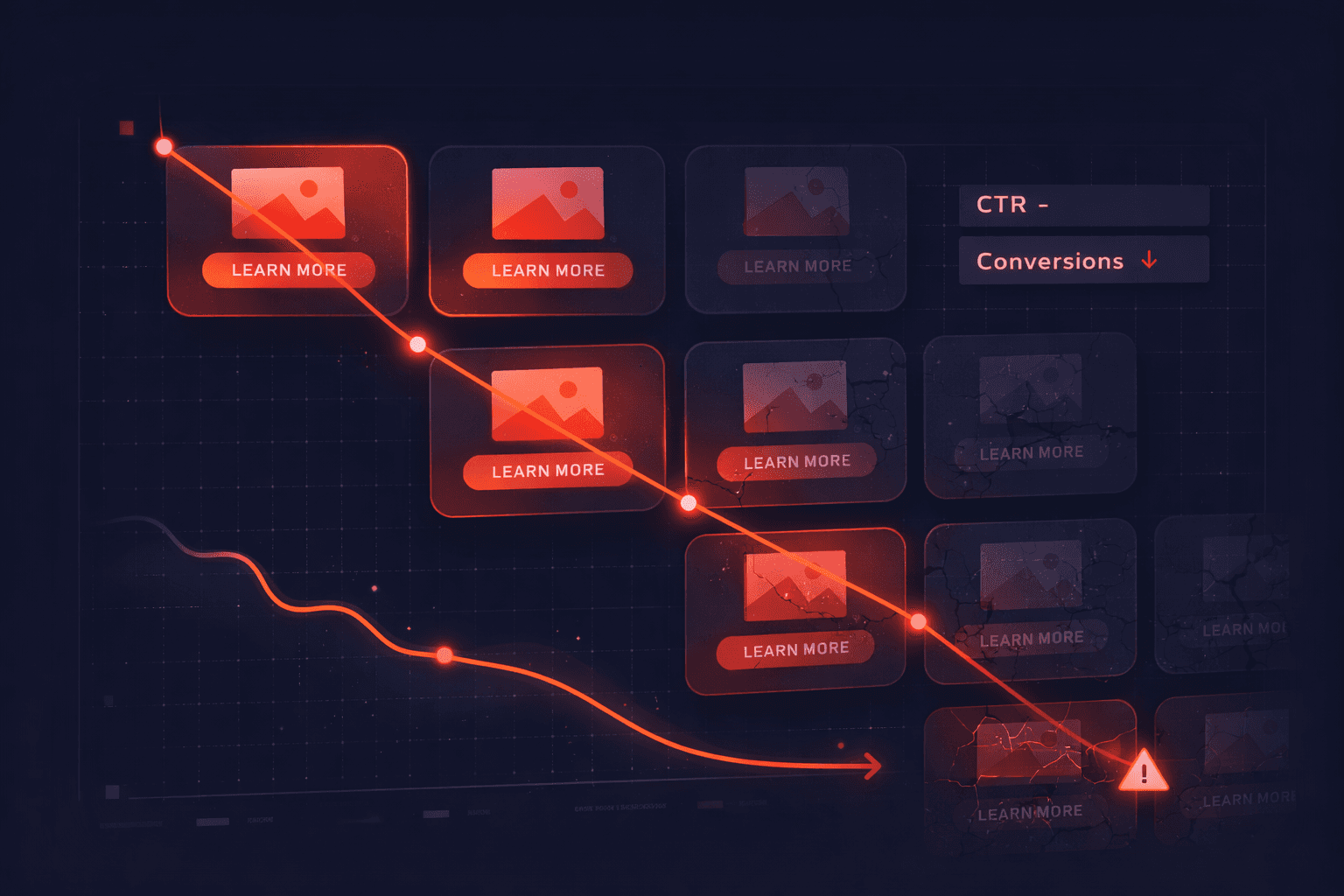
Paid advertising inside conversational AI tools is now a real, working channel. OpenAI began testing ads inside ChatGPT for Free and Go tier users on February 9, 2026, and opened a self-serve ads manager to US businesses that May. A recent panel between OpenAI and Kargo laid out some genuinely useful early lessons on how it's performing. In one case cited on that panel, an advertiser scaled a single ad concept out to roughly 20,000 creative variations, each written for a specific customer situation, and saw a sharp lift in clickthrough rate as a result. That's the kind of tactic that makes headlines. It's also the kind of tactic that assumes a media budget and creative pipeline most SMBs simply don't have yet.
That doesn't mean the shift happening in how people search doesn't matter to you. It means the first move isn't buying a placement. It's finding out where you already stand.
What's actually changed
The old search box compressed a decision into a few keywords. A conversation doesn't. Someone planning a purchase now talks through their budget, their constraints, their preferences, and their doubts, all in one thread, and the tool responds to the whole picture rather than five words typed into a box.
That means the research phase, the comparison phase, and the decision phase increasingly happen in the same place, sometimes in the same conversation. There's no separate visit to review sites, no separate scroll through six competitor homepages. The AI does the comparing on the customer's behalf, using whatever it can find about the businesses in the running.
Which raises an uncomfortable question for a lot of small and mid-sized businesses: what happens when your business isn't one of the ones it found?
There's a popular stat floating around that traditional search volume was set to drop 25% by 2026, from a Gartner prediction made back in 2024. Worth being straight about this one: as 2026 has played out, that hasn't happened in the way it was framed. Google still holds the large majority of search share, and traditional search hasn't collapsed. What has genuinely changed is behaviour at the margins and more people opening an AI tool first for certain kinds of questions, and a growing share of those conversations ending in a decision rather than a click. The shift is real. The 25% headline just isn't the right way to describe it.
Why this matters more for a $5M business than a $500M one
A large brand with strong domain authority, years of press coverage, and a well-indexed website has a natural head start in what these tools already know about it. A growing SMB usually doesn't. Thin content, inconsistent service pages, no structured data, a site built for humans clicking through a menu rather than for a language model trying to extract a clear answer — all of that adds up to a business that's harder for AI to recommend confidently, even when it's genuinely the right fit for the customer asking.
This is the part that should worry a founder more than the ad platform news. Paid placements sit next to an answer that's already been decided. If the model never considers your business a candidate for that answer in the first place, no amount of ad spend fixes that at the point of decision. You're not being outbid. You're not in the conversation.
Three things worth understanding before you spend anything
Ads don't influence what the AI actually says. Buying a placement gets you a spot near a recommendation the model has already reached on its own. It doesn't change the recommendation. That's a meaningfully different mechanic to paid search, where bidding can put you at the top regardless of organic strength, and it's the main reason organic visibility now carries more weight than it used to, not less.
The web is still the raw material. These tools build their answers from what's crawlable, current, and specific. A site with vague service pages, outdated case studies, or no clear answer to "who is this actually for" gives a model very little to work with. This is the same discipline that's always mattered for SEO, just with a less forgiving evaluator.
Context beats cleverness. In the panel, one detail stood out: brands seeing traction weren't the ones with the wittiest ad copy, they were the ones that had clearly defined the specific problem being solved for the specific person asking. That's a smaller, more achievable bar for an SMB than out-producing a competitor's creative team. You don't need 20,000 ad variations. You need one page that answers one real customer question clearly enough that a model can lift it with confidence.
What to actually do this month
Skip the campaign brief for now. Start here instead.
Run the audit yourself, today. Ask ChatGPT, Gemini, and Perplexity the questions your best-fit customers would ask before hiring or buying from a business like yours. Note whether you show up, how you're described, and who shows up instead of you. This costs nothing and takes twenty minutes.
Rewrite your five most important pages as direct answers. Not keyword-stuffed copy — genuine, specific answers to the question a real customer is asking when they land there. If a page can't answer "why should I pick this business for this specific need" in the first two paragraphs, a model won't be able to either.
Clean up the data a model would actually read. Consistent business information across your site, directories, and social profiles. Clear service descriptions. Case studies with real numbers, not adjectives. This is unglamorous work, and it's exactly the work that determines whether you're recommended or skipped.
Treat paid conversational ads as a 2027 conversation, not a 2026 to-do. The channel is moving fast and it's worth tracking. It isn't yet built for a business testing with a modest monthly budget. Get the organic foundation right first, so that when the ad tooling matures and the entry cost comes down, you're advertising into a channel that already recommends you rather than trying to buy your way into relevance from zero.
Where Blend sits on this
We've been telling clients for a while now that being the answer an AI tool gives is quietly becoming as important as ranking on page one of Google, and for a lot of SMBs, more achievable in the short term. It doesn't require a media budget. It requires the same fundamentals good marketing has always required: knowing exactly who you're for, saying it clearly, and backing it up with something specific rather than generic.
Paid ads in conversational AI will matter eventually, and probably sooner than most predictions suggest. But spending there before you've earned an organic recommendation is like buying billboard space for a store nobody can find the entrance to. Fix the entrance first.
If you want an honest read on how your business currently shows up when AI tools are asked about you, that's a conversation worth having before it's a campaign worth funding.
Written by
Dylan Fields
When not hard at work, Danny can be found enjoying the outdoors, seeing live music, and exercising. Danny is passionate about data-informed decisions and strongly believes in implementing cohesive measurement frameworks to ensure all media is accountable for driving business outcomes. Throughout his career, he has developed full-funnel media strategies to drive both Brand Awareness and Growth objectives. He also loves ideating and activating first-to-market opportunities for clients to help brands stay innovative and at the forefront of their vertical.